Embracing Wild Yards: The Rewilding Garden Trend
I remember standing in a neighbor yard one summer afternoon. Bees hovered over clover blossoms that had crept across what used to be a perfectly trimmed lawn. The air felt alive with movement and soft sound. There was no sharp smell of cut grass and no rigid edges between flowerbeds and turf. Only a sense of quiet balance remained. That moment stayed with me. It reminded me that gardens do not always need to be controlled to be beautiful.
This idea sits at the heart of the rewilding garden trend. The movement invites homeowners to loosen their grip on perfection and welcome a more natural rhythm. It is about letting grass grow a bit taller, choosing plants that belong to the region, and accepting that insects, birds, and even small mammals have a rightful place in yards.
Understanding Rewilding in the Home Landscape
Rewilding in a garden setting means creating conditions where nature can thrive with minimal interference. It does not mean neglect. It means thoughtful design that supports biodiversity and reduces maintenance. The idea started with large landscapes and conservation projects. It has found a home in residential yards where small changes can add up to big ecological improvements.
When people hear the word wild they sometimes imagine chaos. In truth a rewilded yard is not messy. It simply follows natural patterns instead of strict human ones. Edges might soften. Colors may shift with the seasons. Textures will vary. A sense of balance still remains.
The No-Mow Movement and the Shift in Lawn Culture
Traditional lawns have long been a symbol of order and pride. Yet they demand regular mowing, watering, and fertilizing. The no-mow movement challenges that standard. It encourages people to let parts of their lawn grow naturally or replace them with native groundcovers.
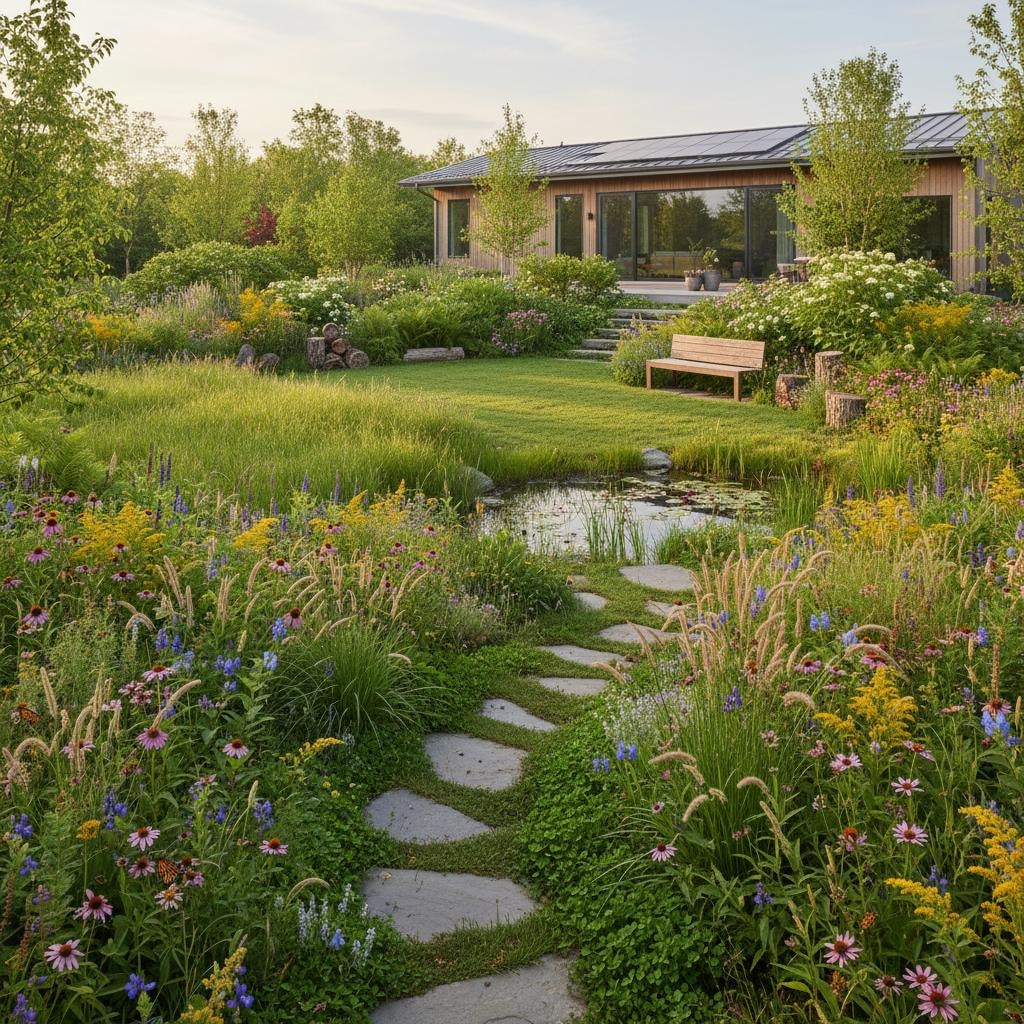
A rewilded lawn can include native grasses that require less water and fewer chemicals. Flowering clovers feed pollinators and add soft color. Low-growing wildflowers fill the space with seasonal variety. When viewed from the street such a yard looks relaxed rather than neglected. The key is intention. Defined paths, stone borders, or a few planned plant groupings show that the space is cared for even if it leans toward the wild side.
The Aesthetic of the Wild
A rewilded garden has a particular mood. It feels alive, textured, and layered. Instead of one uniform surface there are pockets of interest. A tall grass sways near a patch of coneflowers while a small shrub shelters a nesting bird. This layered structure mirrors how plants grow in nature.
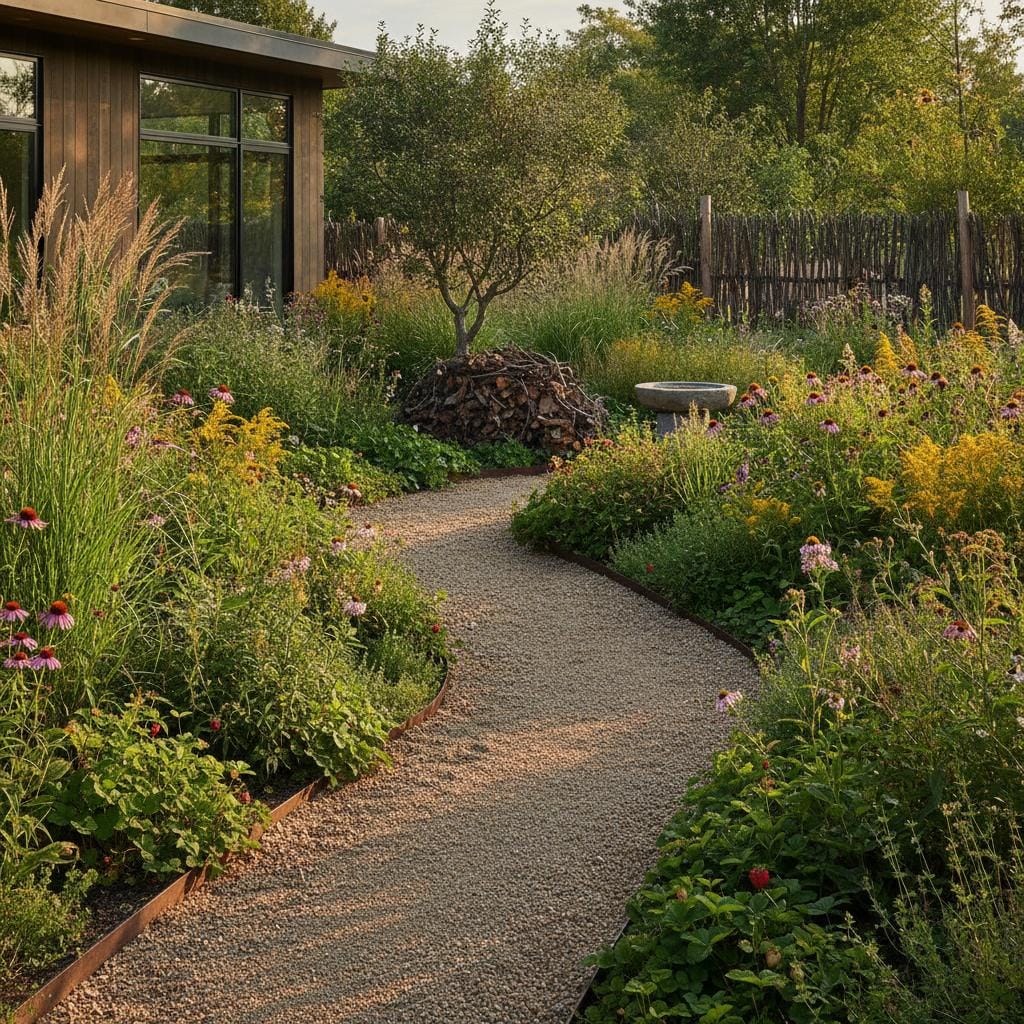
To keep the wild aesthetic balanced it helps to think in contrasts. Pair soft loose plantings with simple structured elements such as a gravel path or a wooden bench. The contrast highlights the beauty of both natural and human touches.
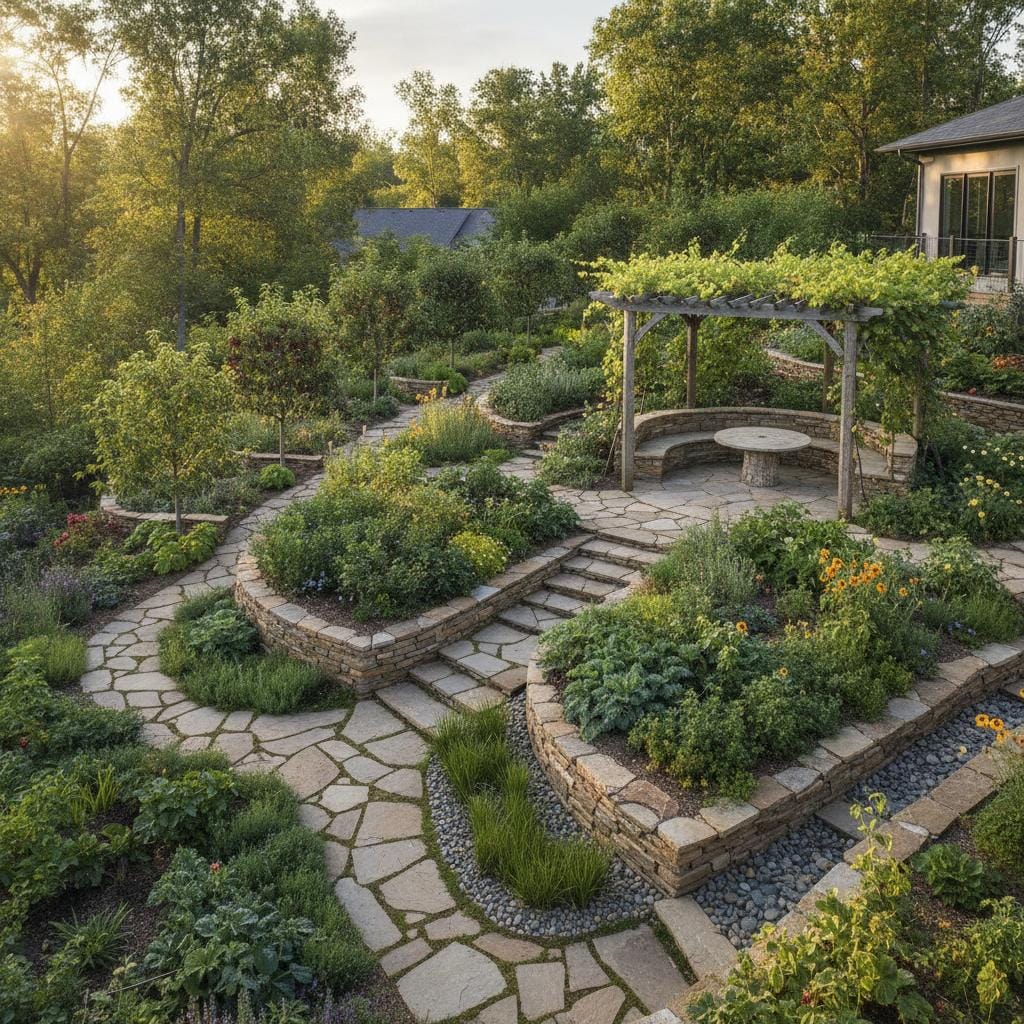
Consider how different styles influence the feeling of a rewilded garden. Rustic and natural designs use untrimmed grasses, weathered stones, and native wildflowers to create a meadow-like look. Modern and restrained approaches combine native perennials with clean-lined planters or pathways. Cottage-inspired styles mix dense colorful plantings of ornamentals with edibles for lively layered charm. Each approach reflects a different personality yet all share the same respect for natural processes.
The Ecological Value of Letting Go
When a yard reverts to a more natural state it quickly becomes a habitat. Bees, butterflies, and beetles return followed by birds and small mammals. This renewal supports local ecosystems that have been fragmented by development and uniform lawns. Native plants are especially important because they have evolved with the local climate and wildlife. They need less water, fewer chemicals, and almost no fuss once established. They also provide the right kind of pollen and seeds for native species. The result is a self-sustaining cycle that benefits both the homeowner and the environment.
Practical Steps Toward a Rewilded Yard
Rewilding does not have to happen all at once. In fact gradual change often works best. It allows you to observe how the space responds and how comfortable you feel with each transition. Start with small manageable steps. Reduce mowing frequency and let sections of the lawn grow taller between trims. You might be surprised by the wildflowers that appear. Replace turf with native groundcovers such as creeping thyme, sedges, and clovers. These plants form beautiful low-maintenance carpets. Plant a pollinator patch in a sunny spot with native flowers that attract bees and butterflies. Add structure with natural materials like rocks, logs, or small brush piles to create habitats for insects and amphibians. Use mulch thoughtfully because natural leaf litter supports soil health better than synthetic materials.
Small patches of wildness can eventually connect into larger networks that support more wildlife. Even a few square feet make a difference.
Balancing Beauty and Function
A rewilded garden can be both practical and beautiful. The trick lies in managing the boundaries between cultivated and wild areas. Paths, fences, or low hedges provide visual cues that help the eye make sense of the natural variation. For instance a mown path winding through taller grasses signals care and intention. A neatly edged flowerbed beside a looser meadow planting creates a pleasing rhythm between formality and freedom.
Water management also improves in a rewilded yard. Native plants have deep roots that absorb rainfall and reduce runoff. This helps prevent erosion and keeps water available for dry periods. Over time healthy soil builds naturally and the need for fertilizers fades away.
Common Misunderstandings About Rewilding
Some people worry that rewilding attracts pests or makes a property look unkempt. These concerns usually come from seeing neglected spaces rather than managed wild ones. A true rewilded garden is observed and maintained though in a gentler way. Pests are less of an issue when biodiversity is high. Natural predators keep populations in check. The presence of birds, beneficial insects, and amphibians balances the ecosystem. The goal is not to eliminate every weed or insect but to create equilibrium.
Another misconception is that wild yards are unsuitable for families or pets. In reality they can be more engaging. Children discover more living things in a wild corner than in a trimmed lawn. Dogs enjoy exploring varied textures and scents. The key is designing safe accessible zones within the wildness.
Rewilding in Urban and Suburban Spaces
Even small city gardens or suburban plots can participate in rewilding. Container gardens with native plants, balcony planters filled with herbs, or shared community green strips can all contribute to local biodiversity. Urban rewilding encourages connection with nature where it is often missing. It softens hard surfaces and cools microclimates. It also brings neighbors together as people notice how their choices influence birds and insects across property lines. When several homes in a neighborhood adopt a more natural approach the effect compounds. Streets begin to buzz with life and the sense of community deepens.
Designing with the Seasons in Mind
Part of the beauty of a rewilded garden is how it changes with time. Instead of trying to maintain a single look you start to appreciate the shifts from one season to the next. Spring brings tender growth and early blooms. Summer hums with pollinators. Autumn offers seed heads and warm colors. Winter reveals structure and texture. Designing for these changes means selecting plants that offer interest at different times. Grasses that hold their shape through winter, shrubs with berries, or perennials that fade gracefully all contribute to a sense of continuity. Leaving seed heads and dried stems through the cold months supports wildlife and adds visual interest. When the new growth arrives the cycle begins again stronger each year.
Emotional Rewards of Rewilding
There is something deeply satisfying about watching a landscape care for itself. The sound of bees in clover, the sight of a butterfly landing on a milkweed blossom, or the call of a wren from a shrub all bring a sense of calm. Rewilding reconnects us with natural rhythms that modern living often hides. It reminds us that beauty does not always come from control. It can come from cooperation, patience, and trust in nature ability to restore itself. Many homeowners find that tending a rewilded garden feels less like work and more like partnership. You observe, adjust, and learn. Each season teaches something new about resilience and adaptation.
Living with Your Design
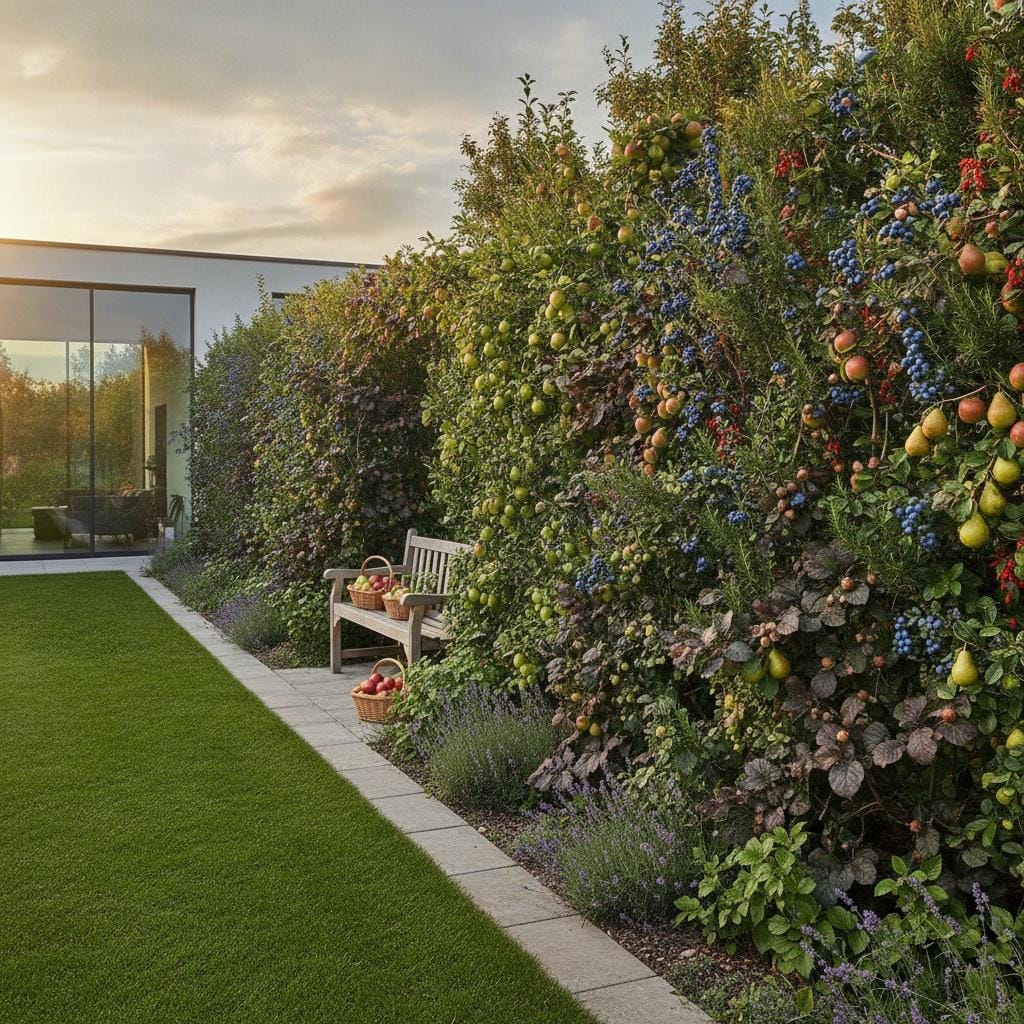
Once a wild yard begins to establish itself maintenance becomes more about observation than correction. You might trim a path here or remove a plant that spreads too aggressively. Most of the work involves guiding rather than imposing. Mulching with natural debris, leaving fallen leaves as habitat, and allowing seed dispersal all contribute to long-term health. Over time you will recognize which plants thrive naturally and which need help. This feedback loop makes the garden smarter and more stable. You can also integrate productive elements into a rewilded design. Edible plants such as herbs, berries, or fruit trees fit naturally among native species. They provide food for both people and wildlife and they bridge the gap between ornamental and functional landscaping.
Making It Happen
If you are considering rewilding your yard start with curiosity. Spend time observing how sunlight moves across your property and where water collects after rain. Notice the plants that already grow without much help. These clues reveal what your land wants to be. Choose one area to experiment with first. Replace manicured grass with a mix of native plants suited to your soil and light conditions. Watch how the space changes through the seasons before expanding further. Rewilding is not about abandoning control. It is about finding harmony between human care and natural process. The reward is a living landscape that supports life, invites wonder, and teaches patience. When you step outside and hear the hum of insects and the rustle of tall grass you will know that your yard has become more than a patch of land.