Preserve the Night Sky in Your Backyard with Dark Sky Lighting
A profound sense of wonder emerges under a clear, dark sky. The pace of daily life eases, allowing stars to emerge as distant beacons of natural beauty visible from your own backyard. However, widespread outdoor lighting has diminished this experience for countless homeowners. Thoughtful dark sky lighting design enables a secure and inviting yard without compromising the celestial view above.
The core principle of dark sky lighting involves illuminating only essential areas at specific times, minimizing unnecessary light emission.
Defining Dark Sky Lighting Principles
Dark sky lighting extends beyond aesthetic preferences; it represents a strategic method to curb glare, prevent light intrusion on neighboring properties, and diminish atmospheric glow. This technique directs light downward to serve practical purposes, thereby enhancing star visibility, optimizing nighttime perception, and safeguarding nocturnal species that rely on darkness for navigation and repose.
Traditional outdoor fixtures disperse light omnidirectionally, including upward, where it scatters via atmospheric moisture and particulates, forming a luminous haze that obscures stars in urban and suburban settings. Dark sky compliant fixtures incorporate shielding and precise positioning to contain light spill, delivering effective yet subdued illumination.
Benefits for Homeowners
Homeowners often navigate trade-offs among aesthetics, security, and efficiency in outdoor lighting. Intense fixtures may appear to bolster safety, yet they generate stark shadows that impair visibility. Excessive brightness disrupts circadian rhythms and escalates energy consumption. Dark sky lighting addresses these issues by concentrating light on targeted zones.
Beyond practical advantages, this approach fosters emotional well-being. Emerging into a yard where constellations shine fosters tranquility and a bond with nature. Families can engage in stargazing sessions or appreciate the subtle radiance of illuminated pathways, evoking a harmonious pace absent in illuminated urban nights.
Selecting Fixtures for Night Sky Preservation
Prioritize fixtures certified as dark sky compliant, featuring integrated shields or hoods that block upward and lateral light escape. Recessed bulbs ensure downward-focused beams, restricting illumination to intended surfaces.
Recommended fixture types include:
- Full cutoff wall-mounted lanterns: Secure these to walls or posts for downward projection, perfect for illuminating patios, doorways, and gathering spots without sky contamination.
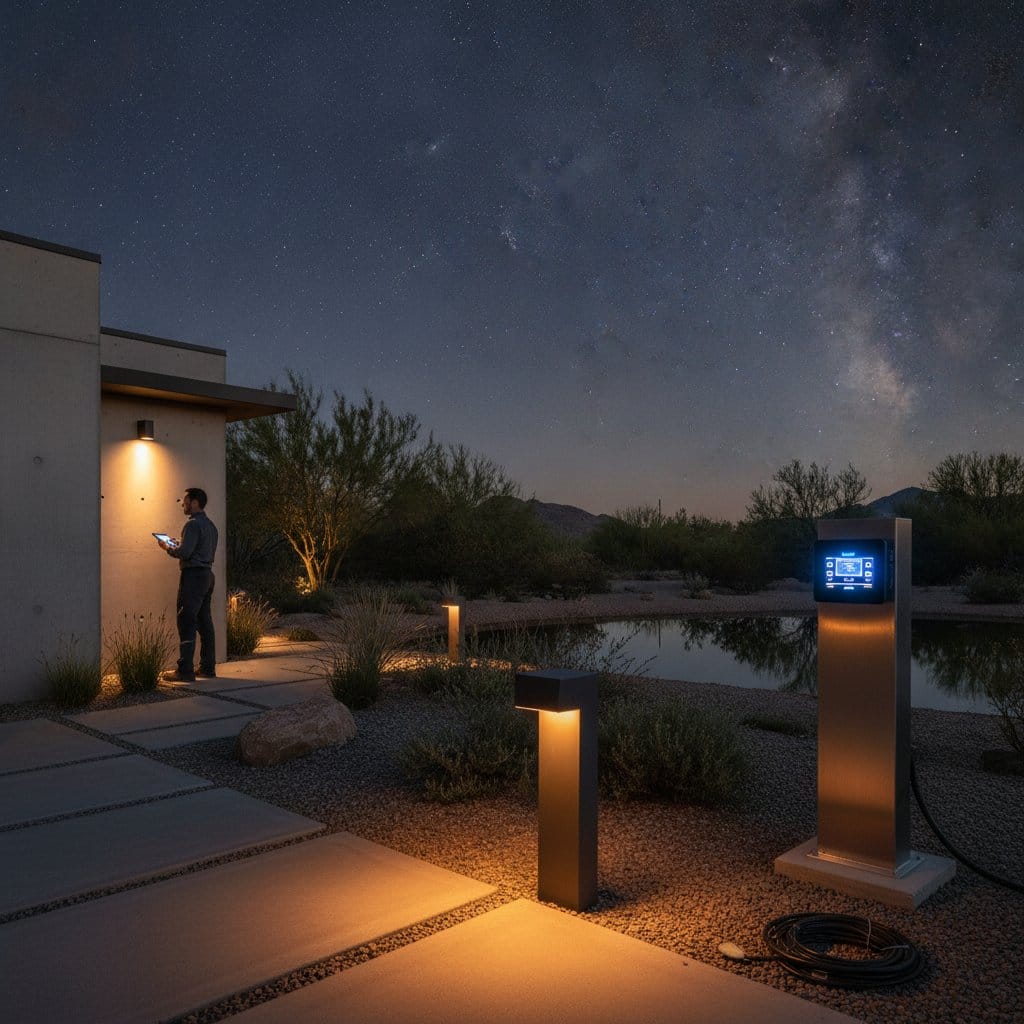
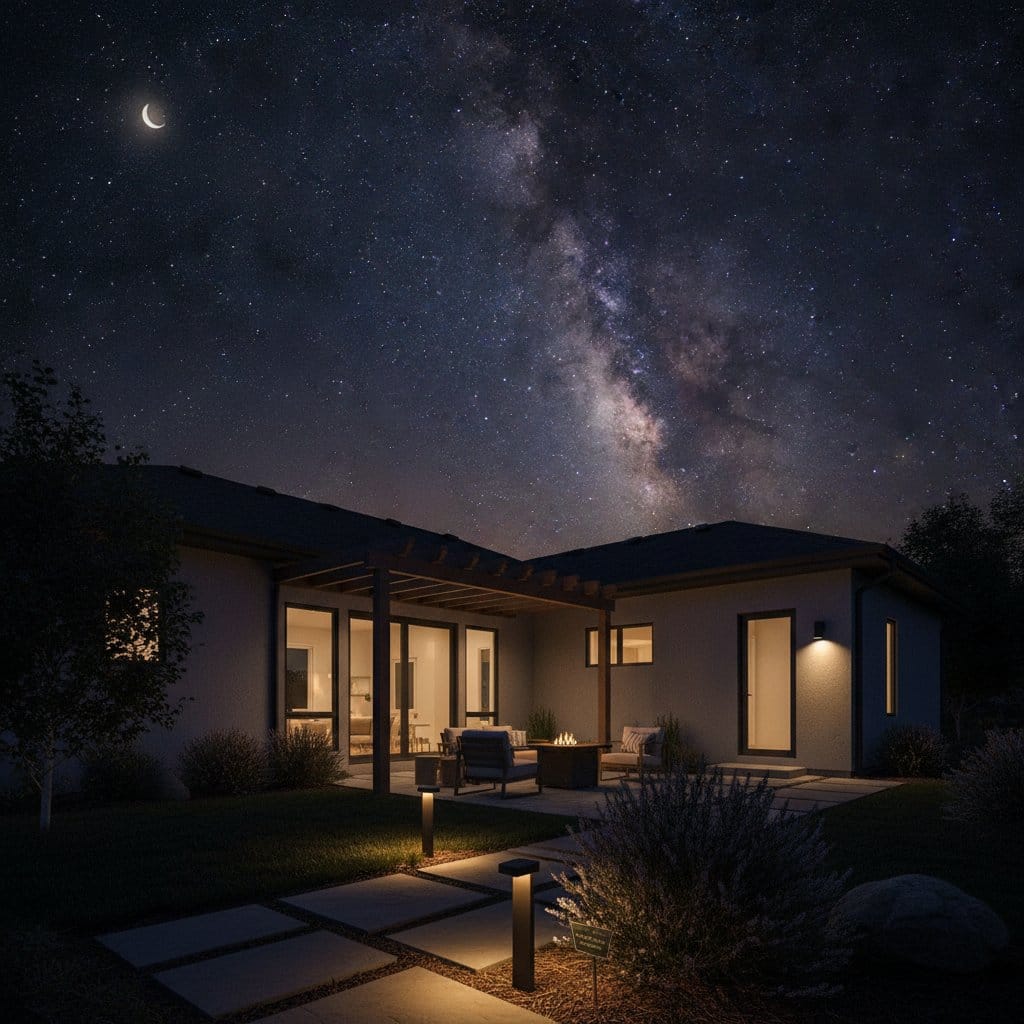
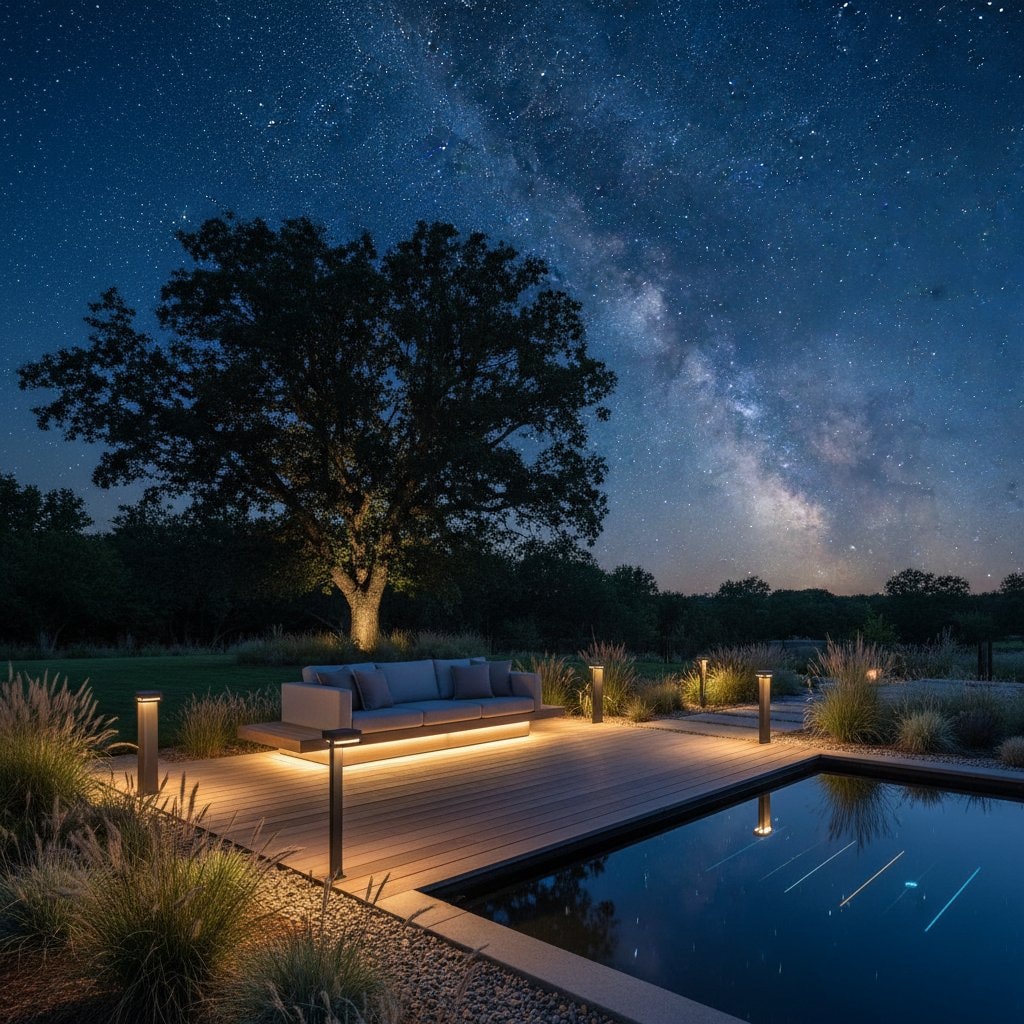
- Shielded pathway and landscape lights: Position these low to the ground to accentuate trails and plantings, maintaining light proximity to surfaces and avoiding broad dispersion.
- Motion-sensor security floods: Employ sensors to activate lights solely upon detecting movement, conserving energy and reducing constant exposure compared to perpetual operation.
- Warm-toned LED bulbs: Select options with color temperatures below 3000K, such as warm white or amber hues, to soften glare and promote eye comfort during evening use.
During installation, evaluate actual lighting requirements. Create defined pools of moderate intensity rather than uniform high-output coverage. This strategy delineates functional zones while upholding the night's inherent depth and mystery.
Integrating Beauty and Practicality in Design
An appealing yard thrives on nuanced lighting rather than overwhelming brilliance. Subtle layering and transitional glows cultivate an atmosphere of warmth and accessibility.
Incorporate low-level path illuminators to delineate routes toward seating arrangements, complemented by a singular overhead downlight over tables or benches for intimate highlights. For arboreal or architectural elements, apply ground-level uplighting with narrow-beam shields to accentuate foliage textures or structural details. Reserve any upward lighting for focal points like textured walls, ensuring reflections do not illuminate the sky.
Such designs establish visual harmony and expand perceived space. The gaze navigates intentional highlights amid softer shadows, enhancing overall spatial dynamics.
Broader Environmental and Community Impacts
Adopting dark sky lighting in individual yards advances collective environmental goals. Reduced light pollution restores unobstructed skies for surrounding residents. Nocturnal fauna, including birds, pollinators, and mammals, regain orientation cues essential for foraging and migration, bolstering local biodiversity.
Efficiency gains manifest in reduced energy demands through lower-wattage sources and timed activation, translating to measurable utility savings. These accumulate over seasons, preserving yard functionality and allure.
Neighborhoods embracing these practices experience heightened cohesion. Restored night skies encourage outdoor interactions, spark discussions on celestial observations, and cultivate a profound attachment to communal landscapes.
Sustaining Your Dark Sky Lighting System
Adapting to dark sky lighting reveals rapid visual acclimation to its tempered glow. Initial perceptions of dimness, stemming from prior exposure to intense floods, yield to appreciation of nuanced shadows and enhanced details.
The night regains vitality through layered contrasts. Maintenance involves periodic fixture cleaning to clear debris, consistent bulb replacements matching original warm tones, and shield integrity checks. As landscapes evolve with new plantings or features, reassess lighting configurations to sustain equilibrium. Minor tweaks often yield significant enhancements in performance and ambiance.
Reclaim Evening Serenity Through Intentional Illumination
Dark sky lighting harmonizes contemporary yard enhancements with celestial preservation, demanding only deliberate planning. This choice yields a sanctuary that is secure, aesthetically refined, and attuned to natural cycles. Evenings transform into opportunities for unencumbered skyward gazes, deepening appreciation for the cosmos from the comfort of home.